
AI search is compressing the customer decision journey. Here's what SEA marketing teams must rethink about SEO, content, and conversion strategy now.
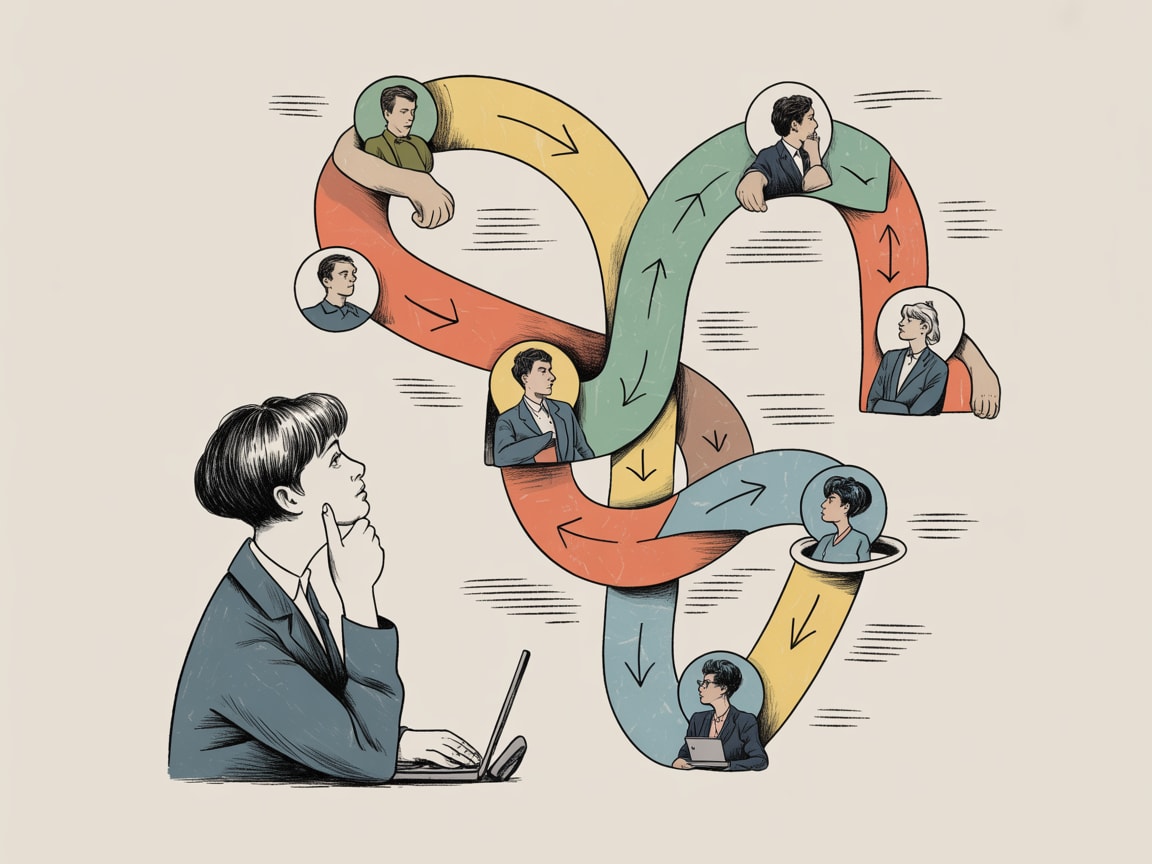
The average consumer used to take a predictable path: awareness, consideration, comparison, purchase. That path is now getting folded in half — and AI search is doing the folding.
According to Google’s analysis by David Edelman, AI search is actively compressing the customer decision journey, collapsing what used to be multi-session, multi-touchpoint research into a single synthesised response. For SEA marketing teams still optimising for a linear funnel, this isn’t a future concern. It’s a current structural problem.
AI Search Is Eating the Mid-Funnel Alive
The middle of the funnel — the comparison-heavy, content-rich zone where brands traditionally won consideration — is where AI search hits hardest. When a consumer in Jakarta asks Google’s AI Overview “which project management tool is best for small teams,” they’re getting a synthesised verdict, not a list of URLs to explore. The ten blog posts your team published to capture that query? Many of them will never be seen.
Edelman’s framing is sharp: AI search doesn’t just surface information faster, it makes decisions on behalf of consumers at the consideration stage. This matters acutely in SEA markets like Thailand and Vietnam, where mobile-first users already default to quick answers over deep research sessions. The mid-funnel compression is accelerating behaviour that was already trending.
The strategic implication is uncomfortable but clear: content designed to occupy consideration-stage rankings is losing its return on investment. Brands need to compete at the point where AI assembles its answer — not after.
What SEO Actually Means Now
HubSpot’s analysis, drawing on expert interviews, makes a distinction worth sitting with: traditional SEO optimised for ranking, but AI-era SEO needs to optimise for citation. The question is no longer “does Google rank my page?” but “does Google’s AI reference my brand as a credible source when synthesising an answer?”
This requires a different content architecture. Structured data matters more than ever — not for rich snippets, but because AI models parse schema markup to extract factual claims cleanly. Authoritative, specific content outperforms broad keyword-stuffed articles. A Shopee seller in the Philippines optimising product listings with detailed specifications and verified reviews is, functionally, doing better AI-era SEO than a brand publishing generic category content.
For SEA teams, the multilingual dimension adds a layer of complexity. AI search in Bahasa Indonesia or Thai may draw from a narrower pool of high-quality local sources — which means brands that invest in credible, structured local-language content have a disproportionate opportunity to be cited. The field is less crowded than English-language AI search, for now.
The Organisational Gap Most Teams Are Ignoring
Google’s research on AI workplace transformation in APAC, authored by Shekar Khosla, surfaces a finding that cuts across the SEO conversation: most companies are deploying AI tools without building AI-first thinking into their teams. There’s a difference between giving your content team access to an AI writing assistant and actually restructuring how that team understands content’s role in an AI-mediated search environment.
The brands getting this right in SEA are treating AI search readiness as a cross-functional problem, not a content team problem. At Grab, for instance, integrating AI into customer communication workflows required alignment across product, data, and marketing — not just a prompt template handed to copywriters. The same logic applies to adapting content strategy for AI search: SEO leads, data analysts, and brand strategists need a shared model of how AI citations work, or efforts will remain fragmented.
Khosla’s research points to high-performing APAC teams as those where AI empowerment is distributed — not centralised in a single “AI champion” role. For marketing directors, the practical question is whether their teams have a working understanding of how AI search assembles answers, or whether that knowledge sits only with one or two specialists.
Rethinking Conversion When the Journey Shortens
If AI search compresses the decision journey, the conversion moment shifts. Consumers arriving at a brand’s site — or at a Lazada product page — via an AI-assisted query are arriving with higher intent and shorter patience. They’ve already been partially persuaded by the AI’s synthesis. What they need at the point of landing is confirmation, not education.
This changes the brief for landing pages, product detail pages, and even in-app content across platforms like LINE and Shopee. The content job is no longer to inform — it’s to resolve residual doubt quickly. Social proof, specific technical claims, and transparent pricing do more work than brand narrative at this stage. A/B tests run by SEA e-commerce teams on Shopee have consistently shown that specification-dense product listings outperform lifestyle-led ones for high-intent search traffic — a pattern that will only strengthen as AI search delivers more pre-filtered, intent-heavy visitors.
The brands that will win this shift are those willing to redesign their content hierarchy around a shorter journey — accepting that awareness and consideration may increasingly happen inside the AI response, before a consumer ever reaches their owned channels.
Key Takeaways
- Audit your mid-funnel content portfolio against AI citation potential — prioritise structured, authoritative, specific content over broad keyword volume plays.
- Build AI search literacy across marketing, data, and product teams; treating it as an SEO-only problem will leave strategic gaps at the conversion layer.
- For SEA markets, local-language structured content is an underexploited opportunity — the competition for AI citations in Bahasa, Thai, and Vietnamese is significantly thinner than in English.
The deeper question this raises isn’t tactical — it’s about what brand-building looks like when the consideration stage happens inside a model, not inside your content. If a consumer’s shortlist is assembled by AI before they visit your site, the traditional awareness-to-conversion arc starts to look like a map of a territory that no longer exists. What’s your brand’s strategy for influencing a decision that’s already half-made?
Sources

Written by
Mystic GrizzlyReading the early signals — in consumer behaviour, platform mechanics, and competitive positioning — before they become the consensus. Writing for practitioners who want to act ahead of the curve.