
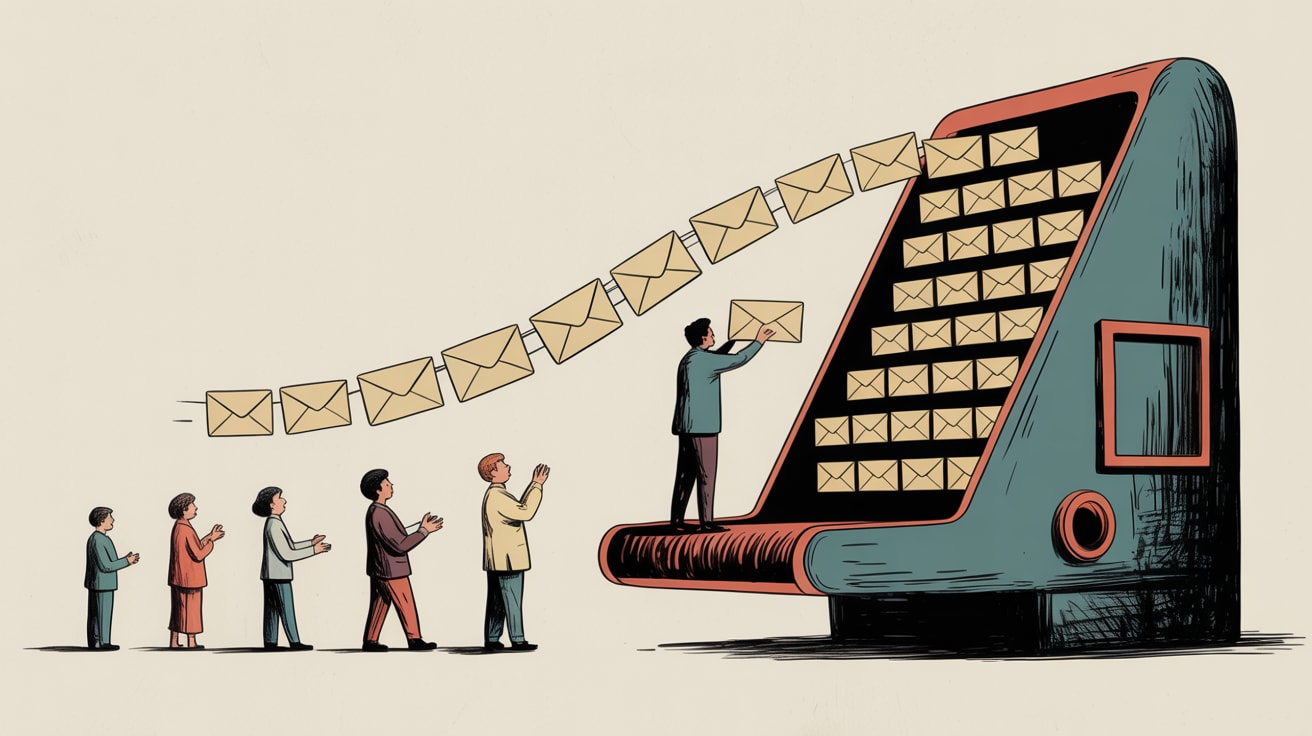
93% of marketers say personalized experiences drive more revenue. Here's how AI email personalization actually works — and what Southeast Asian brands should do first.
Ninety-three percent is not a nuanced number. When HubSpot’s 2026 State of Marketing report finds that 93.2% of marketers say personalized or segmented experiences generate more leads and purchases, the debate about whether to personalize is officially over. The only question left is how — and most teams are still getting it wrong.
The Gap Between Personalization and Actual AI Personalization
Slapping a first name into a subject line is not personalization. It’s mail merge with better PR. Real AI-driven email personalization operates at the behavioral layer — using signals like browse history, purchase cadence, cart abandonment timing, and content affinity to determine not just what to send, but when, how frequently, and in what sequence.
HubSpot’s research highlights that nearly half of marketers are now exploring AI to scale personalization efforts — but exploration is not deployment. The gap between teams experimenting with AI tools and teams running systematic, data-fed personalization engines is significant. In Southeast Asia, where a single brand might be running campaigns across Thai, Bahasa Indonesia, Vietnamese, and English simultaneously, that gap has a compounding cost: generic messaging in a multi-language market reads as indifference.
The first implementation step isn’t choosing a tool. It’s auditing what behavioral data you’re actually collecting and whether your ESP can ingest it meaningfully.
Why Emotional Relevance Is the Missing Variable
Here’s what the personalization conversation consistently underweights: emotional timing. Coca-Cola’s 2026 World Cup campaign — developed by WPP OpenX through Ogilvy — made a deliberate choice to center the emotional arc of football fandom rather than the product itself. That instinct translates directly to email strategy.
AI tools can now analyze engagement patterns to identify where a subscriber is in their emotional relationship with your brand: discovery, consideration, loyalty, dormancy. A subscriber who opened every email for six months and then went quiet isn’t the same as someone who never engaged — they’re a lapsed loyalist, and the message that reactivates them is fundamentally different from an acquisition sequence.
For brands running loyalty programs on platforms like Grab or Shopee, this behavioral-emotional mapping is already partially built into the platform data. The opportunity is pulling that signal into your owned email channel before the platform algorithm makes the relationship purely transactional.
The Tactical Stack That Actually Scales
AI video tools, as Social Media Examiner documented in their April 2026 breakdown, have made high-quality content production dramatically more accessible — and the same compression of cost and time is happening in email personalization infrastructure. Three-tier implementation is the pattern that works:
Tier 1 — Segmentation logic: Define behavioral cohorts manually. AI can’t invent your customer archetypes; it can only optimize against them. Build four to six segments based on purchase frequency, category affinity, and recency.
Tier 2 — Dynamic content blocks: Use AI to auto-populate product recommendations, localized imagery, and language variants within a single template. Tools like Klaviyo, Braze, and MoEngage (well-embedded in SEA markets) handle this at scale without requiring a dedicated developer per campaign.
Tier 3 — Send-time optimization: This is where most teams stop, but it’s actually table stakes. The real lift comes from AI-driven sequence logic — adapting the next email in a flow based on how someone interacted with the last one, not just sending the next scheduled message.
Pitfall to avoid: over-indexing on product personalization while ignoring content personalization. A subscriber who reads every how-to article but rarely clicks a product link is telling you something. Send them education, not promotions.
Building the Business Case Internally
Marketing directors in Southeast Asia often face a specific internal challenge: justifying email investment when the C-suite is fixated on social and paid performance numbers. The strategic framing that lands is ownership versus rental.
Email lists are owned assets. Every subscriber you convert from a Shopee or LINE channel into a direct email relationship reduces your dependency on platform algorithm changes and rising CPMs. HubSpot’s 93.2% figure is useful here — it’s not a marketing claim, it’s a CFO-facing number that connects personalization investment to revenue output.
Timeline reality: a properly instrumented AI personalization system — with clean data pipelines, segmented flows, and dynamic content — takes eight to twelve weeks to build correctly. Brands that rush this to hit a campaign deadline typically end up with a sophisticated-looking system producing mediocre results, because the data foundation wasn’t given time to mature.
Budget consideration: the tooling cost is rarely the constraint. The constraint is usually internal data access — getting CRM, e-commerce, and ESP data talking to each other. Factor analyst or developer time into the actual cost of implementation.
The brands pulling ahead in 2026 aren’t the ones with the most sophisticated AI tools — they’re the ones who understood that AI personalization is a data discipline first and a technology decision second. As platform ecosystems in Southeast Asia consolidate further and first-party data becomes the primary competitive asset, the question isn’t whether to build this capability. It’s whether you build it before or after your competitors do.
At grzzly, we work with marketing teams across Southeast Asia to design personalization systems that are built on solid data architecture — not just tool subscriptions. If you’re mapping out your email strategy for the next 12 months and want a clear-eyed assessment of where the real leverage is, we’re happy to think through it with you. Let’s talk

Sources

Written by
Mystic GrizzlyReading the early signals — in consumer behaviour, platform mechanics, and competitive positioning — before they become the consensus. Writing for practitioners who want to act ahead of the curve.