Gen Alpha turns 16 this year. AI agents now run 60% of some workflows. Are Southeast Asia's digital strategies keeping pace? A case study perspective.
Two things happened in the same news cycle this week that, taken together, reveal a structural problem in how most marketing teams are operating right now.
Sprout Social published a sharp piece on what marketers consistently misread about Gen Alpha — the cohort whose oldest members turn 16 this year. And Social Media Examiner ran a detailed breakdown of how one entrepreneur automated 60% of their workload using a coordinated system of AI agents. Both stories are interesting individually. Together, they point at the same gap: strategy is moving slower than the environment it’s supposed to navigate.
Gen Alpha Is Not a Younger Millennial — Stop Briefing Them Like One
The instinct to map a new generation onto the previous one is almost irresistible, and almost always wrong. Sprout Social’s analysis flags the core error: marketers are applying Gen Z frameworks to Gen Alpha audiences — chasing authenticity signals, prioritising short-form video, leaning on influencer credibility. The problem is that Alphas grew up post-algorithm. They don’t experience a feed the way Gen Z did in 2018. They experience curated, personalised, AI-assisted content environments from day one.
In Southeast Asia, this distinction is sharper. Platforms like TikTok Shop, Shopee Live, and YouTube Kids have shaped Alpha media consumption in ways that have no direct Western equivalent. A 15-year-old in Jakarta or Manila isn’t just mobile-first — they’re app-native in ecosystems that blur commerce, entertainment, and social in a single session. Campaigns built around linear awareness-to-conversion funnels don’t map onto that behaviour.
The actionable shift: stop segmenting by age and start segmenting by platform behaviour. A brand appearing on Shopee Live needs different creative logic than one on Instagram Reels — even if the audience age overlaps.
The AI Agent Mistake Everyone Is Making Right Now
Social Media Examiner’s piece by Michael Stelzner is one of the more honest accounts of AI agent implementation I’ve read recently — specifically because it leads with the failure mode before the fix. The common error is building one-size-fits-all agents and expecting them to generalise. They don’t. What actually works, the piece documents, is a system of specialised agents with defined handoffs — each one scoped to a specific task, feeding outputs to the next.
The entrepreneur profiled achieved 60% workload automation not by deploying a single powerful agent, but by mapping their actual workflow first, identifying the five or six discrete tasks that consumed the most time, and building targeted agents for each. The architecture matters more than the model.
For marketing teams in Southeast Asia, the translation is direct: the reason most AI pilots disappoint is that they’re deployed against vague problems. “Help us with content” is not a solvable brief for an agent. “Draft three Shopee product description variants per SKU, in Bahasa Indonesia, using this tone guide, triggered when a new SKU is uploaded to our PIM” is.
Where These Two Stories Intersect — and Why It Matters Strategically
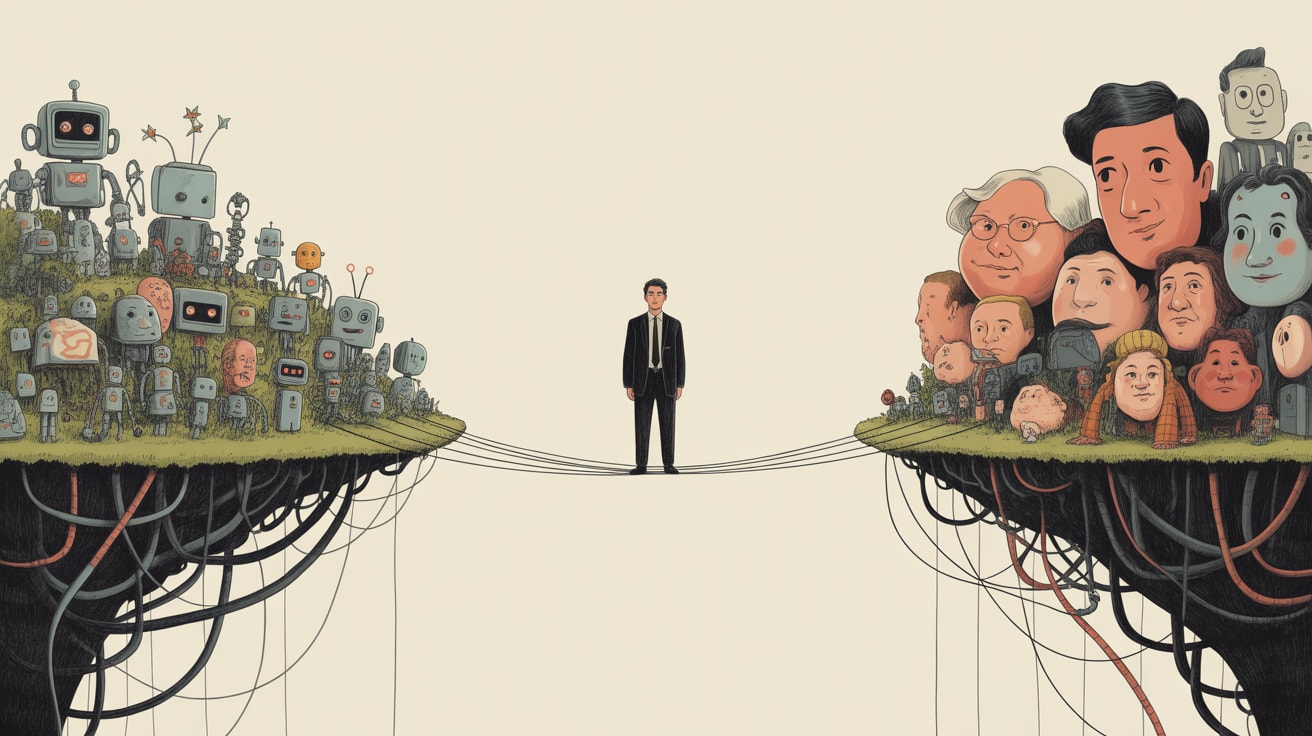
Here’s the thing that struck me reading both pieces back to back: the Gen Alpha challenge and the AI agent challenge share the same root failure. Both require marketers to do the harder cognitive work before deploying tactics.
With Gen Alpha, the work is behavioural mapping — understanding how this audience actually navigates their platform environments, not assuming it mirrors older cohorts. With AI agents, the work is process mapping — understanding what your workflow actually consists of, not assuming a smart tool will figure it out.
Brands that skip the mapping step in both cases will get results that look almost right. Campaigns that get engagement but don’t convert. AI tools that save some time but create new coordination overhead. The almost-right outcome is actually the dangerous one — it’s convincing enough to delay the deeper diagnosis.
One case worth noting: a regional FMCG brand running Shopee campaigns in three Southeast Asian markets tried deploying a generalised AI content agent for localisation. Output quality was inconsistent — grammatically fine, culturally off. The fix wasn’t a better model. It was splitting the task into three market-specific agents with separate tone libraries and human-in-the-loop review at the cultural nuance stage. Scoping solved what scaling couldn’t.
Building the Strategy Layer That Connects Both
The practical question is how teams actually bridge between these two demands simultaneously — understanding a new audience cohort while also rebuilding operational infrastructure around AI. The answer isn’t to sequence them.
The smarter approach is to use the AI infrastructure build as the mechanism for generating Gen Alpha insight. Automated social listening agents scoped specifically to Gen Alpha platform behaviour — tracking not just mentions but interaction patterns, comment sentiment, and content format preferences — can surface the behavioural mapping data you need without adding analyst headcount.
Several regional digital teams are already running this playbook quietly. They’re not announcing it as AI strategy. They’re presenting it to stakeholders as audience intelligence capability. That framing matters — it moves budget from the innovation line to the research line, which is almost always easier to approve.
The timeline implication: a well-scoped agent system for audience intelligence can be operational in six to eight weeks. The bigger investment is the two weeks of process and data mapping that has to happen before a single agent is built. That upfront work is where most organisations balk — and where most implementations subsequently fail.
Key Takeaways
- Segment Gen Alpha audiences by platform behaviour pattern, not age bracket — their media environments in Southeast Asia are structurally different from Gen Z’s.
- AI agent systems outperform single agents because specialisation beats generalisation; map your workflow before you build anything.
- Use AI agent infrastructure as an audience intelligence mechanism — automate the behavioural research that informs your Gen Alpha strategy rather than treating them as separate workstreams.
The question worth sitting with: if the brands that get Gen Alpha right will be the ones who map behaviour before briefing creative, and the teams that get AI right will be the ones who map process before deploying tools — what does that say about where strategic thinking has to live in your organisation? And who, right now, owns that mapping function?
At grzzly, this is exactly the terrain we work in with growth teams across Southeast Asia — helping brands build the strategic architecture that sits underneath both audience understanding and operational automation, before the tactics get deployed. If your team is navigating either of these shifts, or both at once, let’s talk.
Sources

Written by
Plot GrizzlyDocumenting the campaigns, systems, and decisions that actually moved the needle — with the intellectual honesty to include what failed and why. Narrative rigour as a professional standard.