
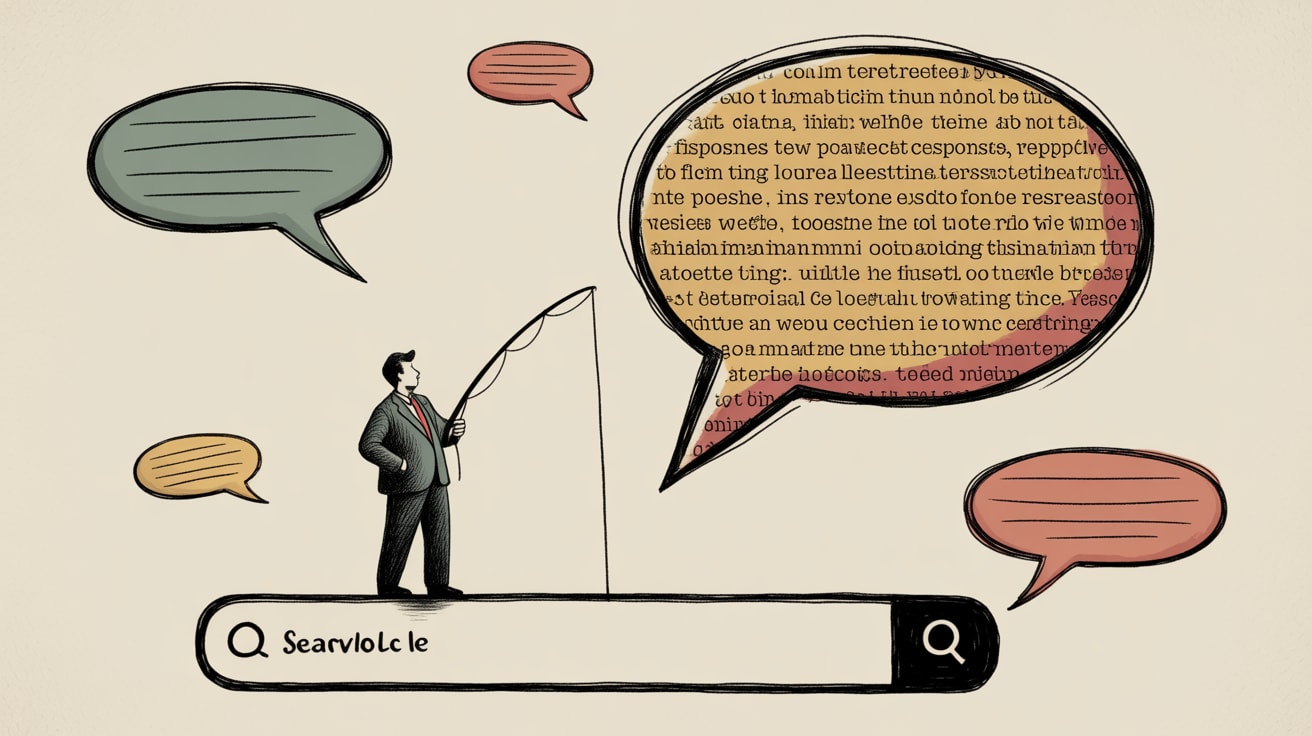
AI answer engines are quietly stealing your search visibility. Here's how AEO checker tools and AI video production reshape your digital strategy in 2026.
Your brand ranks on page one. ChatGPT has never heard of you. Welcome to the gap that’s quietly reshaping digital strategy in 2026.
The Visibility Problem Nobody Measured Until Now
For two decades, search visibility meant one thing: keyword rankings. But as HubSpot’s coverage of AEO checker tools makes clear, a growing share of buyer journeys now begin — and end — inside AI answer engines. A shopper asks ChatGPT which CRM to evaluate. A procurement lead queries Perplexity for logistics software recommendations. They act on the reply without clicking a single link. If your brand isn’t cited in those answers, your organic rank is largely decorative.
This isn’t a niche edge case. It’s a structural shift in how considered-purchase decisions get made, particularly in Southeast Asia where mobile-first users have enthusiastically adopted AI assistants within super-apps and standalone tools alike. The buyer journey was already fragmented across Shopee, LINE, and Grab touchpoints — now there’s another invisible touchpoint sitting upstream of all of them.
The strategic implication is straightforward: share of voice in AI answers is the new share of voice in search. Most brands have no idea what their current position is.
Choosing Your AEO Measurement Stack
HubSpot’s comparison of Scrunch and Peec AI offers a useful frame for how teams should think about tooling. Both platforms measure AI answer engine representation — essentially, how often and how favourably your brand appears when AI systems respond to queries in your category. But they serve different organisational needs.
Scrunch is positioned for teams that want granular buyer-segment analysis: it maps AI visibility against specific audience types and purchase stages, which matters if your brand targets distinct personas with different information needs. Peec AI takes a broader competitive-benchmarking approach — useful if you need to demonstrate category-level positioning to senior stakeholders who think in market-share terms rather than query-level specifics.
For most Southeast Asian marketing teams, the practical starting point is simpler: run a structured set of category queries across ChatGPT, Perplexity, and Gemini, document which competitors get cited and in what context, and establish that baseline before committing to any tool subscription. The tools accelerate and systematise what you could do manually — but manual first means you’ll know what you’re actually buying.
Budget consideration: both tools sit in the mid-market SaaS range. If your organisation is already paying for an SEO platform, pressure your vendor to add AEO tracking rather than spinning up a second subscription.
AI Video Production Has Crossed the Practicality Threshold
In parallel with the AEO shift, there’s a content production story that deserves equal attention. Social Media Examiner’s Michael Stelzner walked through how Google’s Gemini Omni enables teams to create professional-grade video content — AI avatars, scroll-stopping hooks, edited footage — without a production crew or a presenter willing to be on camera.
This matters strategically, not just tactically. Video remains the highest-engagement format across every major Southeast Asian platform — TikTok, Instagram Reels, YouTube Shorts, even LINE VOOM. But production cost and talent availability have always been the bottleneck for sustained, high-volume video output. Gemini Omni meaningfully lowers that floor.
The practical workflow Stelzner describes: generate a script, create an AI avatar or use existing footage, produce a hook sequence designed to interrupt the scroll within the first two seconds, then edit for platform-specific formats. For a regional brand managing content across Thai, Bahasa Indonesia, Vietnamese, and English audiences simultaneously, this isn’t just a cost story — it’s a localisation scalability story. An AI avatar doesn’t need to be re-filmed; it needs to be re-prompted.
The failure mode to avoid: using AI video production to accelerate mediocre ideas. The technology removes the production bottleneck, not the strategic one. Teams that treat it as a quantity lever without sharpening their creative brief first will produce more content that performs worse.
Connecting AEO and Video Into a Coherent 2026 Strategy
Here’s the synthesis that most coverage misses: AEO and AI video aren’t parallel trends — they’re two sides of the same strategic problem.
AI answer engines cite sources partly based on content authority and coverage depth. A brand that publishes substantive, well-structured content — including video content that gets transcribed, indexed, and referenced — builds the kind of digital footprint that makes it more likely to be surfaced in AI-generated answers. Video isn’t just a social engagement play; at sufficient scale and quality, it feeds the content ecosystem that AEO visibility depends on.
Conversely, tracking your AEO visibility tells you which questions your content isn’t answering well enough to be cited. That’s a content brief. The brands that close this loop — using AEO data to identify gaps, then using AI video production to fill those gaps efficiently — are compounding advantage in both channels simultaneously.
For Southeast Asian brands specifically, the opportunity is asymmetric. Category AI visibility in most verticals across the region is still lightly contested. The brands that establish authoritative positioning in AI answer engines now, while competitors are still focused on conventional SEO metrics, will find that position significantly harder to dislodge in eighteen months.
The question worth sitting with: if a well-informed buyer in your category asked an AI assistant for a shortlist today, would your brand make the cut — and do you actually know?
At grzzly, we work with growth teams across Southeast Asia on exactly this intersection — building content and channel strategies that account for how AI is reshaping discovery, not just optimising for where discovery used to happen. If your team is trying to get a handle on AEO visibility or scale content production without scaling headcount, we’re thinking about the same problems. Let’s talk
Sources

Written by
Vintage GrizzlySynthesising channel intelligence, audience psychology, and market context into coherent growth strategies. Old enough to remember the last paradigm shift; sharp enough to see the next one forming.