
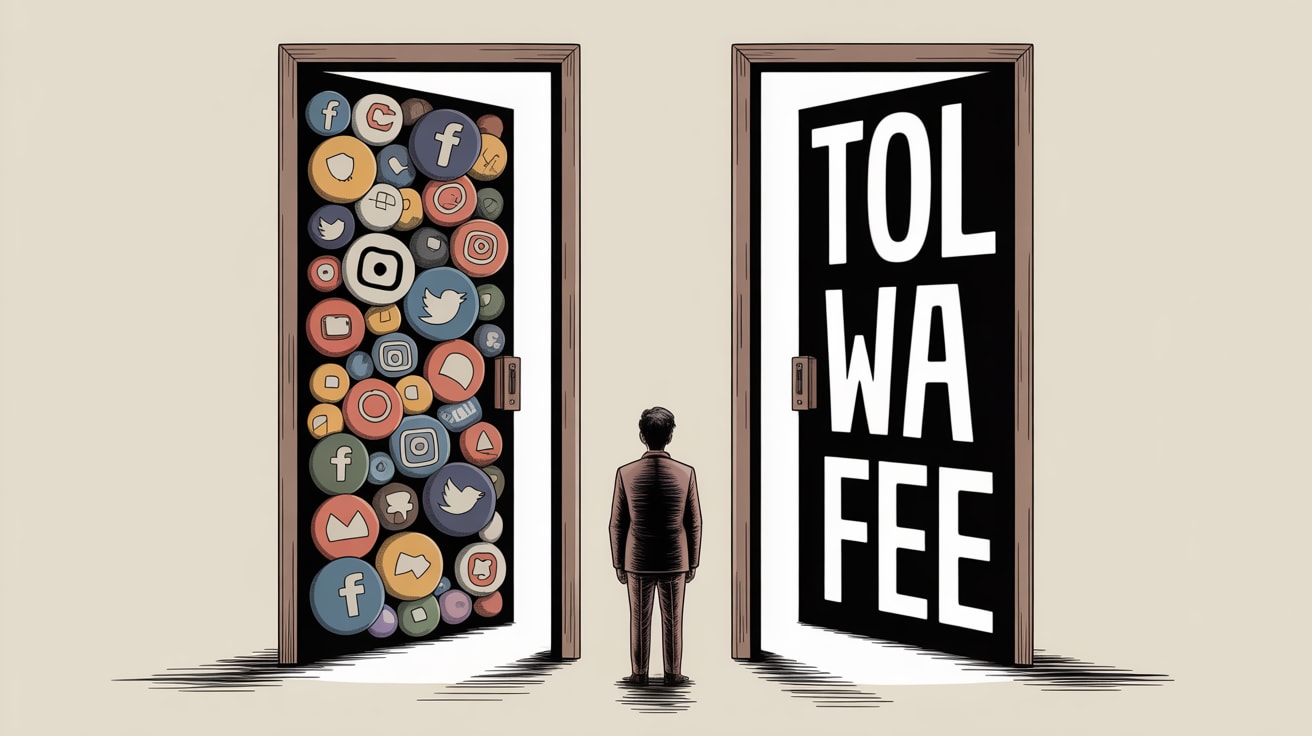
AEO rank trackers and Pinterest's real-world campaign signal a quiet platform shift. Here's what digital marketers in Southeast Asia should act on now.
Two signals landed this week that, read separately, seem unrelated. Read together, they sketch something that should probably be on your strategy agenda before Q3 planning locks in.
Pinterest is running its first major campaign under new CMO Claudine Cheever — and it’s explicitly positioning the platform against the attention-economy dynamics that define its social media peers. Meanwhile, HubSpot’s breakdown of Answer Engine Optimisation (AEO) rank trackers quietly confirms what a growing number of search strategists have been tracking: AI-generated answers are becoming a primary discovery surface, and most brands have no measurement framework for them yet.
Neither development is dramatic on its own. Together, they point to the same underlying shift — the channels where intent lives are moving.
Pinterest’s Defection From the Social Playbook Is a Strategic Signal
Campaign Live reports that Pinterest’s first campaign under Cheever — built entirely in-house by its House of Creative team — leans into real-life inspiration as a deliberate counter-positioning to social media’s toxicity narrative. This isn’t just brand therapy. It’s a calculated repositioning at a moment when advertiser sentiment toward Meta and TikTok is structurally fragile.
For Southeast Asian marketers, Pinterest’s move is worth watching for a specific reason: the platform has historically underperformed in the region compared to visually-led local alternatives like Xiaohongshu among Chinese-speaking audiences, or Shopee’s own discovery surfaces. But the broader principle — that there is now a real market gap for platforms that can credibly claim to be not addictive — is culturally relevant here too. Thai and Filipino consumers, in particular, have shown strong responsiveness to brand safety narratives in platform selection.
If Pinterest’s repositioning gains traction with advertisers globally, expect copycat positioning from regional platforms within 12–18 months. The early movers who build creative relationships with these platforms now will get better inventory pricing and algorithmic preference.
AEO Visibility Is a Real Metric — and Most Brands Are Flying Blind
HubSpot’s overview of AEO rank trackers names what practitioners have been circling for the better part of a year: when a user asks an AI assistant a product or category question, which brands appear in the generated answer — and how often? Tools are now emerging to measure exactly this, tracking citation frequency, share of voice in AI responses, and sentiment of how brands are characterised.
The practical gap this exposes is significant. A brand might rank #1 on Google for a high-intent keyword and still be entirely absent from the AI-generated answer that sits above the organic results — or that replaces the search entirely in tools like Perplexity or ChatGPT’s browsing mode. These are not the same visibility problems, and they don’t respond to the same fixes.
For content teams, this means structured data hygiene, authoritative third-party citations, and clear factual claims in on-page copy matter more than ever — not for Google crawlers, but because large language models weight these signals when synthesising answers. Brands that have invested in thought leadership content and earned media over the past two years are sitting on an AEO advantage they probably haven’t measured yet.
What This Looks Like in Practice for Southeast Asian Teams
SEA’s digital landscape adds specific texture to both of these trends. Mobile-first consumption patterns mean AI search interfaces — whether native assistants on Android, or embedded AI in browsers — are arriving through the same device that handles LINE messages, Shopee browsing, and GrabFood orders. The AI answer surface isn’t a desktop phenomenon here; it’s already embedded in how consumers move through their phones.
For AEO specifically, multilingual content creates both a challenge and an opportunity. A brand with well-structured Bahasa Indonesia or Thai-language content, properly marked up and cited across credible local publications, can establish AI answer visibility in those languages before competition gets organised. Most AEO tooling is currently English-language-first, which means regional content teams who move early are operating in a less contested space.
On the platform diversification side, Pinterest’s repositioning is a useful prompt for a broader audit: how dependent is your paid social mix on platforms where brand safety concerns are accelerating? Shopee’s native ad products, LINE’s ecosystem in Thailand and Taiwan, and even TikTok Shop’s content-commerce hybrid all represent distribution surfaces that warrant more deliberate investment strategies — particularly as social platform trust continues its slow erosion among older millennial and Gen X buyers.
The Measurement Infrastructure Problem Nobody Wants to Solve First
Here’s the uncomfortable part. Both AEO tracking and cross-platform diversification require measurement infrastructure that most mid-size brand teams have not built. AEO rank trackers are a category that barely existed 18 months ago. Pinterest attribution outside of direct e-commerce clicks is notoriously murky. And most Southeast Asian brands are still reconciling last-click attribution models with a buying journey that spans four or five platforms before conversion.
The brands that will have a structural advantage by 2027 are the ones that start building multi-surface measurement frameworks now — even imperfect ones. A basic AEO audit using available tools, combined with a platform diversification review tied to actual audience intent data, is achievable in a single planning sprint. The cost of delay is compounding: every quarter without AEO visibility data is a quarter of competitive intelligence you can’t recover.
The open question is whether this registers as urgent enough to compete for budget against channels where the measurement is already familiar. That’s less a marketing problem than a stakeholder communication one — and arguably the more interesting strategic challenge heading into the second half of 2026.

Sources

Written by
Mystic GrizzlyReading the early signals — in consumer behaviour, platform mechanics, and competitive positioning — before they become the consensus. Writing for practitioners who want to act ahead of the curve.