AI search engines don't rank — they cite. Here's how Southeast Asian brands can optimise for LLM grounding, ChatGPT indexing, and answer engine visibility.
The search result is no longer the destination. Increasingly, it isn’t even the format. AI answer engines — ChatGPT, Perplexity, Claude, Gemini — are condensing the open web into single-paragraph verdicts, and the brands that don’t appear in those verdicts are effectively invisible to a growing segment of high-intent users.
The Index Has Split in Two
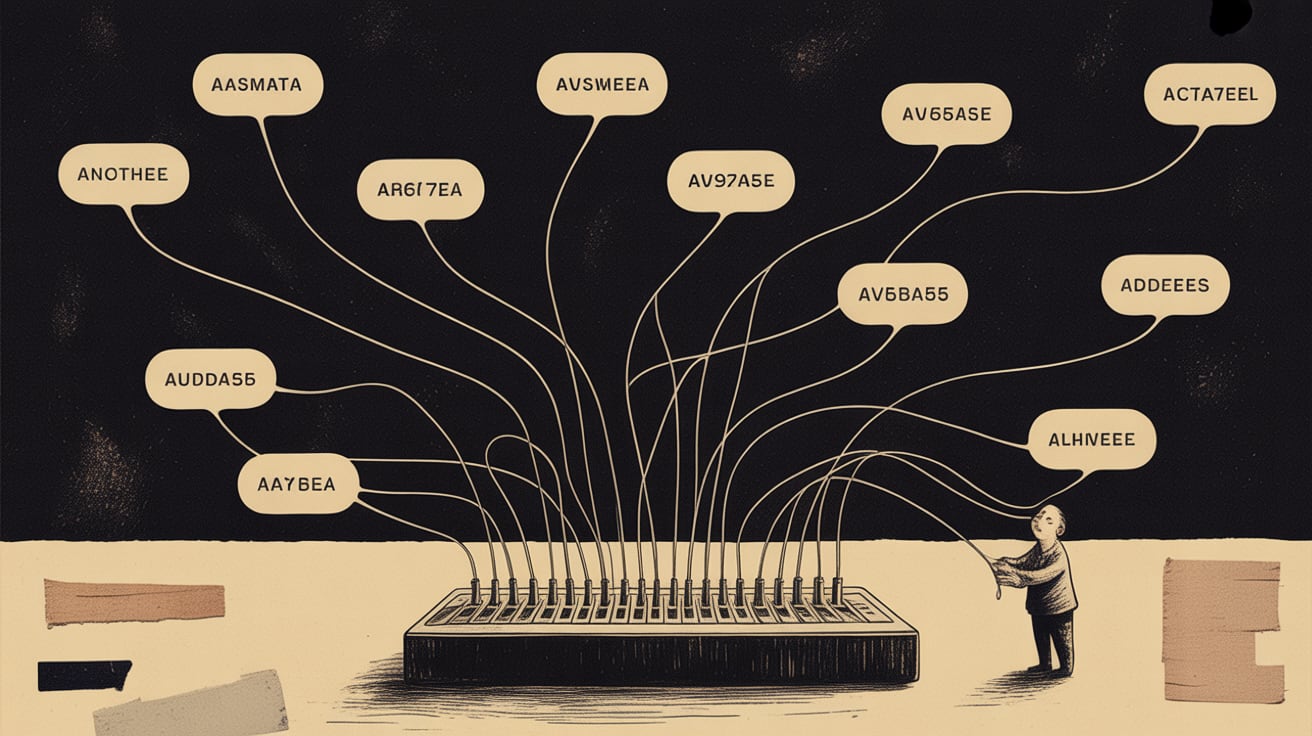
Most SEO teams are still optimising for a single index. That model is outdated. Moz’s Tom Capper draws a sharp distinction that every search strategist should have memorised by now: there’s what’s baked into a model’s training weights, and there’s what gets retrieved live at query time to ground a response in current facts.
These are not the same pipeline, and they don’t reward the same content strategies. Training data favours depth, authority, and volume — the kind of signal that takes months to build. Live retrieval, by contrast, rewards freshness, structured markup, and crawlability by AI agents rather than traditional bots.
ChatGPT’s own search index, highlighted recently by Search Engine Journal, operates on retrieval-augmented generation — meaning OpenAI is actively pulling live web content at query time to supplement what the model already knows. If your site isn’t structured for that retrieval layer, you’re not competing in the same game your competitors are increasingly playing.
For brands in Southeast Asia, the implication is immediate: Shopee product descriptions optimised for keyword density won’t cut it in an environment where an LLM is asking itself, is this source credible enough to cite?
AI Watermarking and the Content Credibility Question
Anthropic’s decision to watermark Claude-generated content — embedding cryptographic provenance signals into every output — sounds like a compliance story. It’s actually a citation story.
Ahrefs’ Ryan Law makes the case that for most marketers, watermarking doesn’t change search performance in any immediate, measurable way. Google has held its position that content quality matters more than content origin, and Ahrefs’ own research found that AI-generated content accounts for 5.3% of top-ranking pages — a share that’s growing. But here’s the nuance the headline misses: as AI detection infrastructure matures, provenance signals will increasingly feed into how answer engines assess source trustworthiness.
The practical implication isn’t to avoid AI-assisted content — that ship has sailed. It’s to ensure that whatever you publish, AI-assisted or otherwise, carries clear authorship attribution, original data or perspective, and structured metadata that signals editorial accountability. In markets like Thailand and Vietnam, where multilingual content production at scale almost necessitates AI assistance, the brands that pair AI efficiency with genuine editorial oversight will be better positioned as provenance signals become ranking factors in answer engines.
Campaign Benchmarking: The GA4 Signal You’re Probably Ignoring
Google Analytics 4’s new campaign benchmarking feature is quietly one of the more strategically useful additions of the year. Search Engine Journal flagged it as part of the broader platform update cycle, but it deserves more attention than a bullet point in a news digest.
Benchmarking lets teams contextualise their own channel performance against aggregated industry data — meaning you can finally answer whether your organic search drop is a you-problem or a category-wide shift driven by AI-cited answers cannibalising click-through. For teams managing multi-market campaigns across Indonesia, Malaysia, and the Philippines simultaneously, this kind of contextual calibration has been genuinely difficult to access without expensive third-party tooling.
The strategic play here is to use benchmarking data not just as a diagnostic but as a briefing tool for leadership. When the head of e-commerce asks why organic traffic is down 18%, the answer shouldn’t be a channel-level excuse — it should be a market-wide AEO narrative backed by comparative data. That’s the difference between an SEO report and a search intelligence briefing.
Optimising for the Machine That Decides What You Deserve to Read
Google’s refiled complaint against SerpApi — updated with revised terms, per Search Engine Journal — is a reminder that the search data layer is contested territory. What’s accessible to third-party tools, what gets licensed, and what gets walled off directly affects how marketers track performance in AI-influenced search environments. As that legal landscape evolves, teams should be actively diversifying their measurement stack rather than depending on any single data source.
The broader strategic posture for 2026 and beyond: treat every piece of content as a potential citation candidate, not a ranking candidate. That means leading with verifiable claims, structuring content so retrieval systems can extract discrete answers, and building topical authority across a coherent content cluster rather than chasing isolated keywords. For Southeast Asian brands with complex multilingual requirements, this is also an argument for investing in structured content systems — think headless CMS architecture with consistent schema markup — that make content machine-readable across languages and platforms.
The machines deciding what the world deserves to read are getting better at this judgment every quarter. The question is whether your content strategy is keeping pace — or still writing for a spider that retired two years ago.
As AI answer engines mature from novelty to infrastructure, the brands that treat AEO as a distinct discipline — not a footnote to traditional SEO — will compound their search visibility advantages in ways that are genuinely difficult to reverse-engineer. The real risk isn’t being outranked. It’s being out-cited.
At grzzly, we work with growth teams across Southeast Asia to build search strategies that account for both the traditional SERP and the answer layer — from content architecture and structured data to LLM retrieval optimisation. If your team is trying to make sense of where your brand shows up when AI answers the question, we’d enjoy that conversation. Let’s talk
Sources

Written by
Cosmic GrizzlyMapping the evolving cosmos of search — from traditional SERP dominance to answer engine optimisation and AI-cited authority. Obsessed with how machines decide what the world deserves to read.